Personal Branding for Wellness Professionals: Leading Your Work With Your Voice
Jan 30, 2026
Quick Overview
Personal branding for health and wellness professionals means that you are the face, voice, and guide behind your work, your content, and your marketing.
In this post, we’ll explore:
- What a personal brand actually is (and how it differs from a business brand)
- The core elements that make a personal brand feel coherent and trustworthy
- How personal branding naturally shows up in wellness practices
- Why your voice plays a central role in your content and marketing
- How to approach content creation when you are the brand
What Does It Mean to Have a Personal Brand as a Wellness Professional?
When you first opened your doors as a health & wellness practitioner, you probably weren’t thinking:
I’m building a personal brand.
And yet, over time, something started to happen.
People began associating your name with:
- How you think
- How you explain things
- How you see patterns
- How you guide others through change
In the wellness space, this happens naturally because people aren’t just getting an annual exam. They’re trusting you to:
- Find answers they aren’t getting elsewhere
- Make sense of conflicting information
- Guide them in a new or unconventional approach to care
That level of trust doesn’t come from a logo or a clinic name.
It comes from your unique voice.
And when you use your voice consistently, you start to hear things like:
- “I love how you explain this.”
- “Your posts always make things click for me.”
- “I trust your perspective.”
That’s personal branding. Whether you’ve ever called it that or not.
The moment your work becomes visible (online, in conversations, through content), you’re doing more than practicing.
You’re leading your brand.
Personal Brand vs. Business Brand: What’s the Difference
A business brand is an entity.
It has a name that exists separately from you, a defined set of services, and often a structure that can function without your constant presence.
The messaging for a business brand focuses primarily on what is offered and how it helps. Think:
- A health clinic
- A group practice
- A product-based wellness company
A business brand can also be easier to step away from someday.
A personal brand, on the other hand, is built around you.
Your name, your voice, your values, and your way of thinking are central to the brand (regardless of whether or not your business name reflects that directly).
The messaging still includes what you offer and how you help. But it also weaves in:
- Why you do this work
- How you see the problem differently
- What informs your perspective
- And why people trust you specifically
This is where it becomes important to decide which you are actually building: a business or personal brand.
Because when you build a personal brand but market it like a business brand, your content often feels disconnected from how clients actually experience you.
And once you’re clear on which one you’re building, your messaging and content marketing decisions get much easier.
You start showing up as the guide people are already responding to.
The Core Elements of a Successful Personal Brand
When people encounter your work, whether in a post, an email, a conversation, or a referral, they should feel like they’re meeting the same person each time.
That consistency comes from a few core elements working together.
1: Your Stories
Your stories give context to your work.
You don't have to be fully vulnerable or share every aspect of your life.
You just have to drop a little bit of lived experience into your content. The moments that shape how you practice, teach, and guide. The experiences that:
- Changed how you see health or healing
- Informed your approach
- Taught you what doesn’t work as well as what does
These stories help people trust that your recommendations are grounded in real understanding, not just textbook knowledge.
2: Your Voice
Your voice is how your expertise becomes accessible.
It’s both in what you say and how you say it.
Your voice shows up in:
- The way you explain complex ideas
- The language you return to again and again
- The tone people recognize before they even see your name
Your voice creates familiarity.
And familiarity builds trust.
3: Your Values
Your values are what anchor your brand when things get noisy. They show up in:
- What you stand for
- What you opt out of
- How you talk about results, boundaries, and ethics
Values are revealed through decisions, especially public ones.
What you participate in.
What you decline.
Over time, this becomes part of why people feel safe with you.
4: Your Perspective
Your perspective is your lens.
It’s how you connect dots.
How you interpret trends.
How you explain why something works.
Two practitioners can have the same credentials, but what differentiates them is how they:
- See patterns others miss
- Frame problems differently
- Explain the reasoning behind their recommendations
Your perspective is what turns information into insight.
And insight is what people come back for.
5: Your Presence
Presence is where everything comes together. It looks like:
- Staying consistent in your message
- Showing up as a steady guide
- Letting people feel your leadership without needing constant output
When your presence is grounded, your audience knows what to expect from you.
How These Elements Work Together
A personal brand doesn’t rely on any one of these alone. It works when:
- Your stories give context
- Your voice creates familiarity
- Your values build safety
- Your perspective offers clarity
- And your presence makes it all feel reliable
Benefits of Building a Personal Brand as a Wellness Professional
When your personal brand is clear, several things start to happen naturally.
People “get” you and your work
When your voice and perspective are clear, people don’t have to work as hard to understand what you do.
They understand:
- How you think
- Who you’re best positioned to help
- What makes your approach different
This reduces confusion, shortens the trust gap, and leads to more aligned inquiries. Which leads me to...
You attract clients who are a better fit
When people are drawn to your voice and perspective, not just your services, the work itself tends to feel cleaner.
Clients arrive with clearer expectations.
Conversations feel more aligned.
You attracted more qualified leads to your discovery calls.
The work feels less transactional and more relational.
Trust builds before the first visit
A personal brand allows people to spend time with your thinking before they book, inquire, or commit.
They’ve already heard how you explain things.
They’ve already felt your energy to some extent.
They’ve already decided whether your approach resonates.
By the time they reach out, the relationship has already started.
You become memorable & recognizable
Over time, your ideas become recognizable.
Your language becomes familiar.
Your perspective becomes trusted.
That’s brand recognition.
And it’s one of the most sustainable assets you can build in a wellness business—especially in a space built on trust, nuance, and long-term relationships.
You can pivot easily
Personal brands grow with you.
If your interests shift, your offers expand, or your role evolves, from say clinician to educator to mentor, your brand can hold that change.
You don’t have to start over.
You bring your audience with you.
Creating Content for a Personal Brand
At some point, most practitioners will ask:
Can’t someone else just handle the content part?
The short answer is yes, but not entirely.
Because when you’re building a personal brand, you can outsource some of the execution (design, scheduling, connecting the tech)...
But you can’t outsource your message or ideas.
When content is created without that core perspective, it sounds like what any other practitioner could say.
This is why so many wellness professionals find themselves:
- Rewriting content they’ve outsourced
- Feeling oddly invisible despite “showing up” consistently
- Or shelving content altogether because it doesn’t feel like them
The most sustainable approach isn’t doing everything yourself forever.
It’s staying involved at the source of the message. That means:
- Clarifying your core ideas
- Articulating your perspective in your own words
- And using support tools or collaborators to organize, expand, and distribute (not replace) your voice
When that foundation is in place and once you’ve put in enough reps to actually have clarity on your message, then delegation can work.
If You’re Building a Personal Brand, This Is Your Next Step
If you’ve recognized yourself anywhere in this post, it’s likely because you’re already building a personal brand.
For many wellness professionals, this is the shift from simply doing the work to leading the work through your voice, your message, and your content.
That happens through practice.
Through repetition.
Through writing one email… then another… then another.
Because clarity comes through the act of creating.
This is also where tools can become helpful.
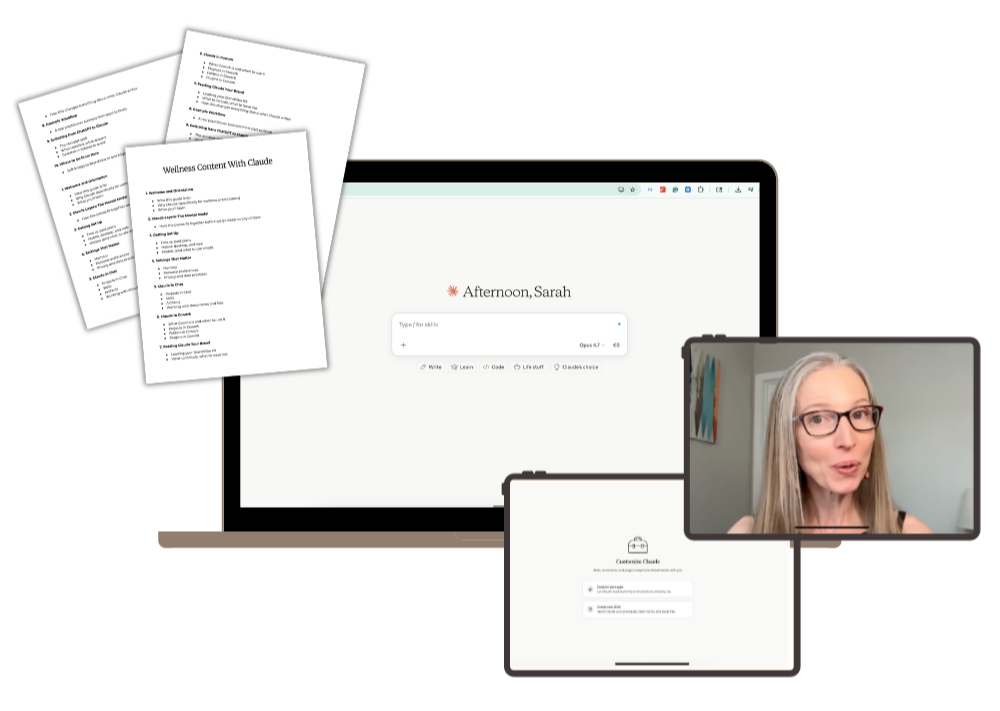
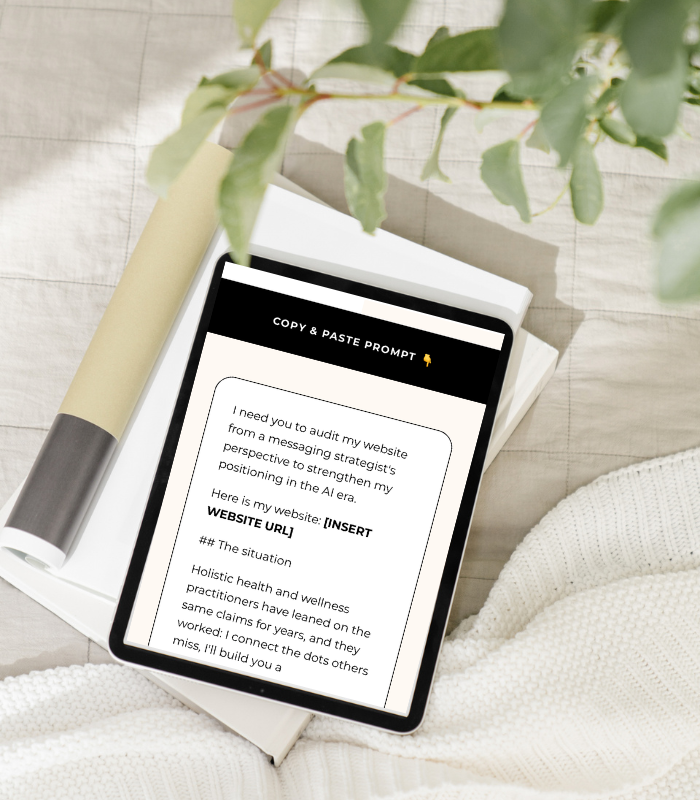
In my programs, I support practitioners in leveraging AI to create content that feels like them.
We use a system to train AI to match your voice and message, so it becomes an asset that evolves with you over time.
Personal Branding for Wellness Professionals FAQ’s
What is personal branding for wellness professionals?
Personal branding for wellness professionals means you are the face, voice, and guide behind your work. It’s how people come to recognize and trust your perspective, approach, and way of explaining health and healing.
What’s the difference between a personal brand and a business brand?
A business brand is an entity with messaging focused on services and outcomes. A personal brand is built around you (your voice, values, and perspective) so trust is formed through your leadership as well as what you offer.
Do wellness practitioners really need a personal brand?
Many wellness practitioners are already building one, even unintentionally, because clients choose providers based on trust and relationship. A clear personal brand helps your message feel consistent and easier for the right people to connect with.
Why does voice matter so much in wellness marketing?
Because people aren’t only choosing a service. They’re choosing who they trust with their health decisions. Your voice helps clients feel your clarity, discernment, and approach before they ever reach out.
What are the core elements of a strong personal brand?
A strong personal brand is built through your stories, voice, values, perspective, and presence. Together, these create coherence so people experience the same “you” across your content and your work.
Can I outsource content creation if I’m building a personal brand?
You can outsource execution, like design, scheduling, and tech. But you can’t fully outsource authorship, because your content needs your thinking, language, and perspective to feel aligned.
How does personal branding affect content creation and marketing?
It shifts your content from generic information to clear leadership. Your marketing becomes more consistent when it’s rooted in your voice, values, and point of view—not just what you offer.
Is personal branding only for coaches or online practitioners?
No. Personal branding applies to clinicians and in-person providers too, especially when your referrals and client trust are based on your approach and reputation.
How do I start building a personal brand as a wellness professional?
Start by clarifying what you believe, how you explain your work, and the patterns you consistently notice in clients. Then practice expressing those ideas regularly through content in a way that feels like you.
How can AI support content creation without replacing my voice?
AI works best when it’s trained on your voice, values, and messaging so it supports your clarity instead of generating generic content. Use it to organize, draft, and refine while you stay involved in the ideas and final decisions.